

by Barbara Waldinger
How does a director in 2024 attempt to update a 1938 Pulitzer-winning play–ABE LINCOLN IN ILLINOIS by Robert E. Sherwood—so that it will speak to today’s audience? And why choose to take on this project when the play was turned into an Oscar-nominated film in 1940 (with Raymond Massey reprising the title role) and has been revived twice onstage in New York (in 1963 and 1993)? In other words, why this play and why now?
Director David Auburn, who had originally prepared to present the piece at Berkshire Theatre Group’s Fitzpatrick Main Stage had to reimagine the staging when he was told that the renovation of the Fitzpatrick wouldn’t be completed in time. That was one of many challenges. The original script was long (104 pages and three acts, each comprised of several scenes in different locations) and called for about thirty-five characters. Yet somehow Auburn, without making major changes in the script, managed to pull it off with such aplomb that the play sizzles with contemporary relevance.
How did he do it? Auburn, whose play PROOF won a Tony and Pulitzer Prize in 2001, is an Associate Artistic Director at BTG, where he recently directed PHOTOGRAPH 51, DRACULA, and THE SKIN OF OUR TEETH, among many others. Realizing that the theatre could not afford to hire enough actors to play every character in ABE LINCOLN IN ILLINOIS, he whittled the number of performers down to eleven, each playing multiple roles, without regard to gender, race or age. But who would portray Lincoln?
According to an article in the Berkshire Eagle, Auburn, searching for a new way to approach the title character, realized that because the play follows Lincoln’s education and development from his early untutored days in New Salem, Illinois to his departure for Washington, D.C. a disillusioned President-elect, we see different aspects of the man in each of the three acts. Auburn decided to cast three different actors. Brandon Dial plays a troubled young Lincoln in the first act, in debt, feeling as though bad luck will follow him everywhere, consumed by thoughts of death, yet a good man capable of deep love. Because he dislikes confrontation, he is able to prevent a physical fight simply by talking the aggressors out of it. The actor is so likable as Lincoln that we wish he’d return in the second act. But it is in this act that Sherwood drives home the consequences of minding one’s own business. Kelli Simpkins’ Lincoln, now five years older, an attorney and favorite speaker at gatherings because of his humorous stories, is pushed into politics by those who want to use his popularity to further their agendas, and to further their ambition, as is the case with Mary Todd, deftly played by a manipulative and spunky Rebecca Brooksher. Lincoln resists getting involved as Simpkins’ plaintive cry “I want only to be left alone,” makes clear. In the third act, Robert G. McKay’s Lincoln, married with children, agrees to run for President but clearly hopes he’ll lose, as the nation heads for Civil War. McKay’s farewell speech to the people of Illinois, as he is about to board the train, is heartbreaking.

Kelli Simpkins and Brandon Dial in the Berkshire Theatre Group production of Robert E. Sherwood’s “Abe Lincoln in Illinois” directed by David Auburn. Photo: David Dashiell. 
Lynnette R. Freeman and David Adkins in the Berkshire Theatre Group production of Robert E. Sherwood’s “Abe Lincoln in Illinois” directed by David Auburn. Photo: David Dashiell. 
Robert G. McKay and Brandon Dial in the Berkshire Theatre Group production of Robert E. Sherwood’s “Abe Lincoln in Illinois” directed by David Auburn. Photo: David Dashiell. 
Isadora Wolfe and Brandon Dial in the Berkshire Theatre Group production of Robert E. Sherwood’s “Abe Lincoln in Illinois” directed by David Auburn. Photo: David Dashiell. 
Brandon Dial and Julian Tushabe in the Berkshire Theatre Group production of Robert E. Sherwood’s “Abe Lincoln in Illinois” directed by David Auburn. Photo: David Dashiell. 
Julian Tushabe and Kelli Simpkins in the Berkshire Theatre Group production of Robert E. Sherwood’s “Abe Lincoln in Illinois” directed by David Auburn. Photo: David Dashiell. 
Kelli Simpkins and Rebecca Brooksher in the Berkshire Theatre Group production of Robert E. Sherwood’s “Abe Lincoln in Illinois” directed by David Auburn. Photo: David Dashiell. 
Robert G. McKay in the Berkshire Theatre Group production of Robert E. Sherwood’s “Abe Lincoln in Illinois” directed by David Auburn. Photo: David Dashiell. 
Kelli Simpkins and David Adkins in the Berkshire Theatre Group production of Robert E. Sherwood’s “Abe Lincoln in Illinois” directed by David Auburn. Photo: David Dashiell. 
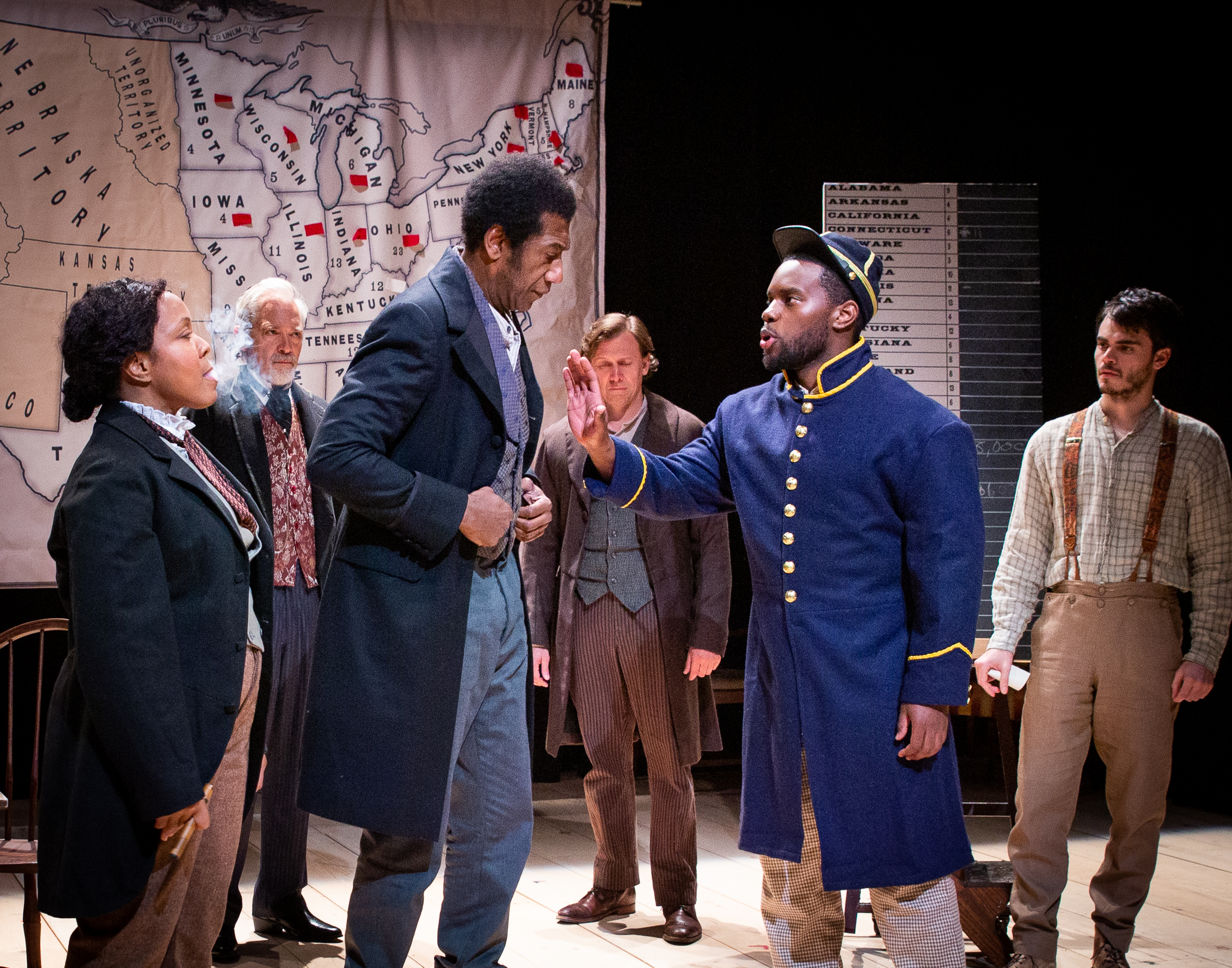
Lynette R. Freeman, David Adkins, Robert G. McKay, Shawn Fagan, Julian Tushabe, and Evan Dibbs in the Berkshire Theatre Group production of Robert E. Sherwood’s “Abe Lincoln in Illinois” directed by David Auburn. Photo: David Dashiell. 
Shawn Fagan, Evan Dibbs, and Lynette R. Freeman in the Berkshire Theatre Group production of Robert E. Sherwood’s “Abe Lincoln in Illinois” directed by David Auburn. Photo: Caelan Carlough. 
Evan Dibbs, Shawn Fagan, and Lynette R. Freeman in the Berkshire Theatre Group production of Robert E. Sherwood’s “Abe Lincoln in Illinois” directed by David Auburn. Photo: Caelan Carlough. 
Rebecca Brooksher, Corinna May, Robert G. McKay, and David Adkins in the Berkshire Theatre Group production of Robert E. Sherwood’s “Abe Lincoln in Illinois” directed by David Auburn. Photo: Caelan Carlough. 
Brandon Dial and Corinna May in the Berkshire Theatre Group production of Robert E. Sherwood’s “Abe Lincoln in Illinois” directed by David Auburn. Photo: David Dashiell. 
Though every actor plays multiple roles, it is always clear who is playing which character. These exceptional cast members, with the help of fellow actor/movement director Isadora Wolfe and dialect coach Jennifer Scapetis Tycer, transform their bodies and voices to create each role. Using a minimalist approach, Costume designer Amanda Roberge and Scenic Designer Bill Clarke provide simple period costumes and very little furniture, moved by the actors themselves at the end of each scene. Lighting designer Seth Reiser uses lights as if they were arrows, pointing us to what we need to see: e.g. that black stovepipe hat, lit center stage in the pre-set. To cover the set changes, actor/musicians play period music on guitar, banjo, drum (very effective) and tambourine joined by the whole ensemble– singing, clapping and stomping. The three-hour play seems to fly by, as the audience, thoroughly absorbed, loses all sense of time.
Perhaps the most striking element of the play, the reason we can’t stop thinking about it afterwards, is the use of Lincoln’s actual debates and speeches, quoted by the playwright and highlighted by the director and his cast. These moments heighten the tension and leave us astonished by their similarity to today’s issues. For example, the third act begins with a Lincoln/Douglas debate as they campaign for Senator from Illinois. Douglas (a strong, convincing Corinna May) brings up factory strikes in the north, questioning why Lincoln doesn’t object to the workers’ lack of freedom, low pay, terrible conditions. To which Lincoln (McKay, who is black) asks how many workers would change places with the enslaved. Douglas talks of the Supreme Court’s Dred Scott decision maintaining that Negroes are inferior and may be considered property, accusing Lincoln of fermenting a revolt against the Court. To which Lincoln replies that the court is made up of mortal men, as honest as other men. He cannot go along with their decision because it sets one group against another, which is tyranny. Once you decide that black men are not equal, then who’s to say the next exceptions to the Declaration of Independence won’t be “foreigners, Catholics, Jews. . . poor people.” Further, in a complete turnaround for Lincoln, he says that if you allow each state to do whatever it wants, you’re complicit in a “complacent policy of indifference to evil,” ending with his famous line: “A house divided against itself cannot stand.” That is how Lincoln was drawn into war, something he shied away from for most of his life.
Standout actors who have not yet been mentioned: Shawn Fagan as both Jack Armstrong (a ”wildcat of Clary’s Grove”) with a patch over one eye, and Billy Herndon, a law clerk and fanatical abolitionist; Lynette R. Freeman playing four different characters, all scene-stealers, including Elizabeth Edwards in a funny, memorable discussion with her sister Mary Todd (Brooksher), trying to persuade Todd not to marry Lincoln, and David Atkins, an always reliable, truthful actor, playing Elizabeth’s husband Ninian, a wealthy politician, dressed to the nines by Amanda Roberge.
Auburn’s new concept for what might have been a dated play allows all of the creative artists involved to shine in this compelling production.
ABE LINCOLN IN ILLINOIS runs from June 13-July 14 at The Unicorn Theatre, The Larry Vaber Stage, 6 East Street, Stockbridge, MA. For tickets call 413-997-4444 or online at BerkshireTheatreGroup.org.
Berkshire Theatre Group presents ABE LINCOLN IN ILLINOIS by Robert E. Sherwood. Director: David Auburn. Cast: David Adkins (Ninian Edwards, Sturveson); Rebecca Brooksher (Ben Mattling, Mary Todd); Brandon Dial (Abe Lincoln: Act 1; Robert Lincoln); Evan Dibbs (Seth Gale, Jed, Major, Musician); Shawn Fagan (Jack Armstrong, Billy Herndon); Lynnette R. Freeman (Jasp, Elizabeth Edwards, Aggie, Crimmin); Corinna May (Nancy Green, Maid, Stephen Douglas); Robert G. McKay (Bowling Green; Abe Lincoln: Act 3); Kelli Simpkins (Mentor Graham, Feargus, Abe Lincoln: Act 2, Barrick); Julian Tushabe (Josh Speed, Gobey, Kavanagh); Isadora Wolfe (Ann Rutledge, Phil). Movement Director: Isadora Wolfe; Scenic Designer: Bill Clarke; Costume Designer: Amanda Roberge; Lighting Designer: Seth Reiser; Sound Designer/Music Supervisor: Scott Killian; Dialect Coach: Jennifer Scapetis Tycer. Production Stage Manager: Pamela Edington.
The production runs three hours. There are two intermissions.